article

A Guide to Home Insulation Materials

By Fran J. Donegan via Realty Times

bluehammer

Insulation is one of those building products that you never see, because it is usually covered up by something else. But if you don't have enough, or if it is installed incorrectly, you're wasting energy and paying more for heating and cooling than is necessary.

There are a number of insulation products you can use to prevent energy loss. However, it is important to realize that insulation is only one part of a two-prong approach to energy efficiency. The other arm of the plan involves sealing all of the holes, cracks or openings caused by pipes, wires, chimneys or anything that creates an opening in a wall, ceiling, or most importantly, attic floor.

These openings allow interior air to escape to the unconditioned (not heated or cooled) space that surrounds your home. The sealing process is called "air sealing," and requires silicone caulk and expanding foam that comes in a can. It isn't exciting work, and while easy, it requires attention to detail. It is extremely important because the openings are escape routes for heated and cooled air and because many insulation products do not stop moving air. If you plan on insulating, be sure to attend to air sealing as well.

Where to Insulate

Basically, insulation should be placed in any area that separates your heated and cooled living spaces from areas that are not heated and cooled. These areas include:

  • Attics
  • Cathedral ceilings
  • Sidewalls
  • Walls between the living area and an attached garage
  • Floors over unheated basements
  • Floors over crawl spaces
  • Foundation walls

Insulation Materials

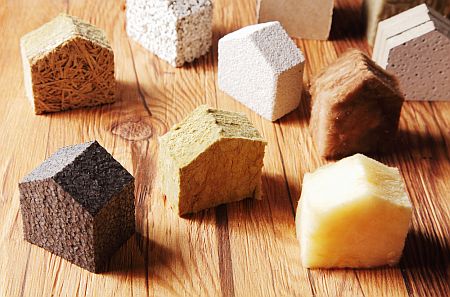
The effectiveness of insulation is measured by its R-value - "R" stands for resistance to heat flow. The higher the R-value, the better. It is important to match the insulation to the application as well. For example, fiberglass insulation has an R-value of about 2.8 to four per inch. Some foam panels have R-values of seven or eight. But you can easily find fiberglass batts or blankets that are 12 inches thick and designed for use as attic insulation, providing over an R-40. Standard foam panels only come in one-half to two inch thicknesses.
bluehammer

Some products are easier to install than others. Fiberglass batts simply roll into place. They are manufactured to fit snugly between ceiling joists and wall studs. When installing any insulation, it is important that the product be placed flat against the surface you are insulating. Any air space under the insulation or gaps around the edges will limit the effectiveness of the product.

Here's a look at some common insulation products:

Type of Insulation
R-Value per Inch
Where It’s Installed
Notes
Fiberglass

Mineral Wool

(Available in batts, blankets and as a loose fill material)
2.8 to 4
  • Attics
  • Open wall stud cavities
  • Floors over unheated spaces
  • Batts and blankets are DIY projects
  • Loose fill is a professional installation
  • Compressing the insulation or getting it wet reduces R-value
Cellulose 3 to 3.7
  • Attics
  • Open wall
  • cavities
  • Closed wall cavities
  • Hard-to-reach areas
  • Cellulose is ground- up paper treated with fire retardants
  • Blown-in with special equipment
  • Can be poured in place
  • Even distribution is necessary for effectiveness
Foam Boards
  • Polystyrene: 4 to 5
  • Polyisocyanurate / polyurethane: 6 to 8
  • Foundation walls
  • Interior basement walls
  • Floors
  • Ceilings
  • Interior applications must be covered with drywall for fire safety
  • Used for air sealing large openings
  • Some types are used under exterior siding to enhance the R value of the wall and prevent heat transfer through framing members
Spray-On Polyurethane
  • Open-cell: 3.6 to 4.3
  • Closed-cell: 5.6 to 6.8
  • Open and enclosed wall cavities
  • Between rafters on cathedral ceilings
  • Hard to reach areas
  • Irregularly shaped areas
  • Requires special application equipment
  • Closed-cell material is denser and acts as a vapor barrier
  • Both act as an air barrier

Use this chart as a reference point when insulating your home. Proper insulation will help lower your energy bills and keep your home at a comfortable temperature.

Want to estimate your home improvement costs before talking with a contractor? Claim your home for free with bluehammer to estimate costs, secure your home inventory and learn more about your home.

* THIS REPORT IS AN OPINION THAT MAY BE INACCURATE AND IS PROVIDED SOLELY AS AN INFORMATIONAL TOOL NOT DESIGNED TO PROVIDE DEFINITIVE ANSWERS. ALL ELEMENTS ARE OFFERED "AS IS" AND BLUEBOOK EXPRESSLY DISCLAIM ANY AND ALL WARRANTIES, REPRESENTATIONS, AND GUARANTEES OF ANY NATURE, EXPRESS, IMPLIED OR OTHERWISE, INCLUDING BUT NOT LIMITED TO ANY IMPLIED WARRANTIES OF MERCHANTABLITILY, NONINFRINGEMENT, TITLE, QUIET ENJOYMENT, ACCURACY, OR FITNESS FOR A PARTICULAR PURPOSE. IN NO EVENT SHALL BLUEBOOK (OR THEIR SUPPLIERS) BE LIABLE FOR ANY GENERAL, DIRECT, SPECIAL, INCIDENTAL, INDIRECT OR CONSEQUENTIAL DAMAGES OF ANY KIND, OR ANY DAMAGES WHATSOEVER (INCLUDING WITHOUT LIMITATION, THOSE RESULTING FROM USE OF THE PRODUCT, INCLUDING : (1) RELIANCE ON THE MATERIALS PRESENTED, (2) COSTS OF REPLACEMENT GOODS, (3) LOSS OF USE, DATA OR PROFITS, (4) DELAYS OR BUSINESS INTERRUPTIONS, (5) AND ANY THEORY OF LIABILITY, ARISING OUT OF OR IN CONNECTION WITH THE USE OR PERFORMANCE OF INFORMATION) WHETHER OR NOT BLUEBOOK HAS BEEN ADVISED OF THE POSSIBILITY OF SUCH DAMAGES.

Know what you should pay for your home improvement projects with bluehammer.Claim your home. It's free!

Popular


Replacing Your Kitchen Refrigerator

Refrigerators are the most important appliance in the Kitchen.

Electric Water Heater Troubleshooting Quickstart Guide

Technology advances are making electric water heaters more popular than ever. The electric water heater market, valued at $6 billion in 2015, will expand at an annual compound growth rate of 7.5 percent to reach $33.22 billion by 2024, Global Market Insights projects. Advances in energy saving, comfort control and display technology are driving demand. As more homes acquire electric water heaters, home owners will increasingly require specialized maintenance for these appliances. Here’s a quickstart guide to assist you when troubleshooting electric water heaters.

Simple DIY Projects That Will Increase the Value of Your Home

Looking to boost the value of your home without spending hundreds of thousands of dollars? You can! Making changes in certain rooms, like the kitchen and bathroom, is more beneficial than in others. These simple DIY projects will help increase your home's value the most.

Can't Sleep? Why Your House Might Be To Blame And What You Can Do About It

Not being able to get sufficient sleep isn't just annoying. Beyond making you grouchy and causing you to yawn all day, it can threaten your immune system, impact your memory, and injure your back. There are a number of potential reasons for your sleeping issues, but your house probably isn't helping. With a few fixes, you may be sleeping soundly in no time.

The Nightmare Next Door: What To Do When Your Neighbor Is a Nuisance

The animals that live in the house across the street bark incessantly. The people two doors down play their music so loud you now know all the lyrics to every Kendrick Lamar song ever written. And something, presumably a dog (you hope) keeps leaving presents on your lawn. Annoyances like these can make it unpleasant to live in your neighborhood. And, they can quickly escalate, becoming dangerous or even in need of legal intervention.

13 Decorations to Pair With Beautiful Dark Walls

Dark walls, from inky blue to charcoal and black, are refined and dramatic - but decorating around them without making your space feel too dark can be tricky. If you've been thinking of painting one or more walls a deep, dark hue, these ideas for color and decor pairings should help.

10 Key Problems to Look Out For and Fix in Your Home

Ignore some of these signs and you may end up with major issues. We tell you which are normal and which are cause for concern

It's Time to Clean Your Kitchen Dishwasher

Whether your dishwasher has a funky smell to it or not, a periodic cleaning should be at the top of your to-do list

Maintaining Your Hot Water Heater

Water heaters generally have a lifespan of 8-12 years, but as with anything, the better care you take of it, the longer it will last. There are several easy "set it and forget it" tips that you can use with your water heater, like keeping the thermostat at 120 degrees, and always maintain two feet of clearance around the appliance. You can also conserve money on your gas bill by setting your heater to its "vacation" setting when leaving town. This will keep the pilot light going without heating the water.

Choosing The Best Hardwood Floors For Your Home

The rich patina of wood floors adds beauty and elegance to any home.

See More Articles